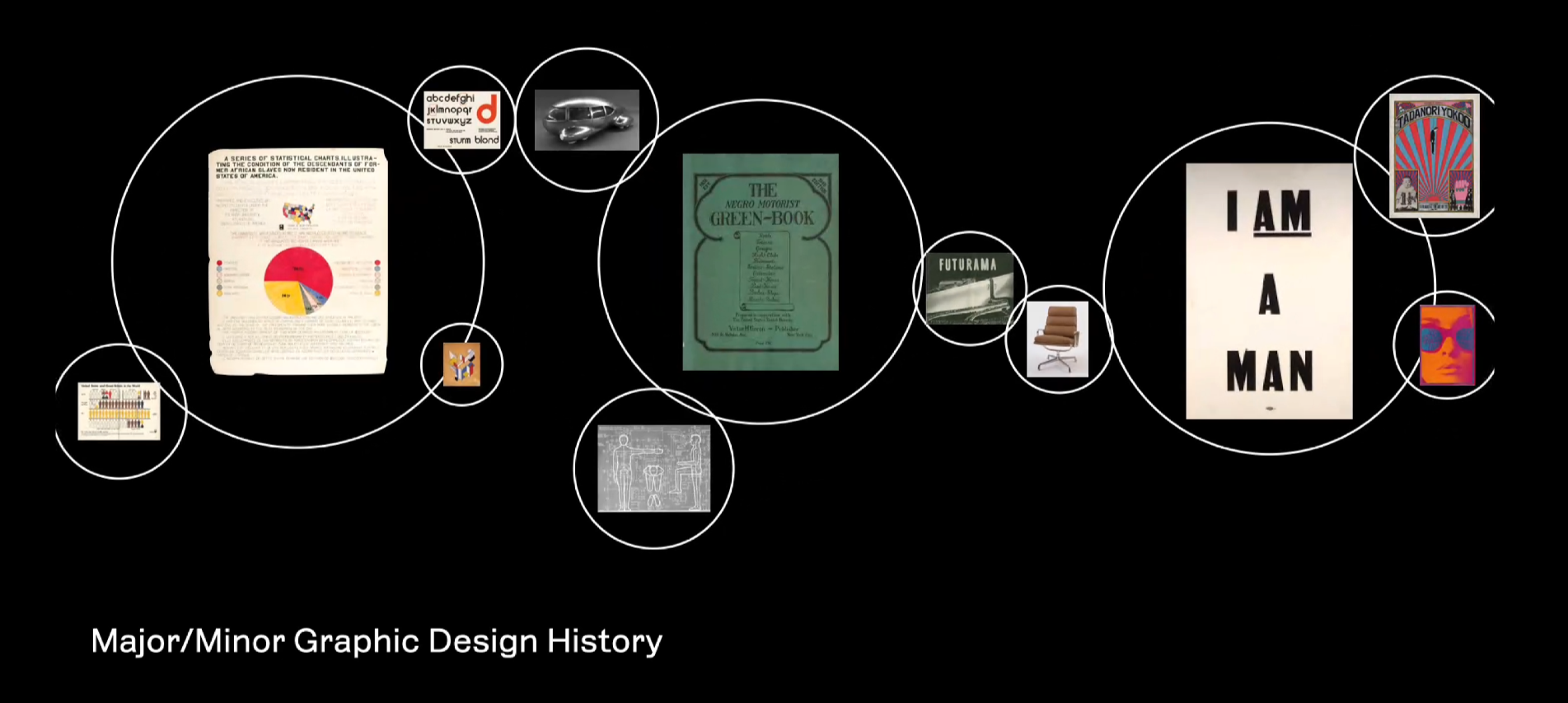
The University of Cincinnati, College of Design, Architecture, Art, and Planning (DAAP) is one of the leading design schools in the United States, known for its rigorous programs across architecture, design, art, and planning. Like many other institutions, DAAP’s design history curriculum reflected a narrow, Eurocentric canon. The faculty recognized the need to diversify and decolonize their curriculum to better reflect the global and interdisciplinary realities of design and their incoming students who make up the classroom.
In early conversations, BIPOC Design History helped DAAP faculty identify gaps in representation, a lack of accessible resources, and limited infrastructure to support a broader range of design histories. BIPOC Design History was brought in to co-create a new curricular framework rooted in accessibility, criticality, community, and integrated personal inquiry. Through a series of internal workshops, working sessions, and research, we built a curriculum that shifted major and minor histories through lecture slides, updated assignments and projects, and room for critical classroom discussion. We redesigned the curriculum specifically for Design History I and Design History II, taken during students’ first and second year of university.
The collaboration spanned sixteen months, from initial conversations in early 2023 through the first full academic year of implementation in 2023–2024.
Phase 1: Initiation (February–March 2023)
Kick-off conversations, scope-of-work approval, and contract signing. Began reviewing existing syllabi to identify gaps and opportunities.
Phase 2: Curriculum Development (April–July 2023)
Intensive co-design period, including bi-weekly collaboration calls with core faculty and monthly wider team reviews. Developed course outlines, weekly lecture presentations, reading lists, assignments, quizzes, and final projects. Materials handed off in July.
Phase 3: Pilot Implementation — Design History II (September–December 2023)
Due to DAAP’s academic calendar, Design History II launched first. Structured check-ins at kick-off, mid-term, and course end allowed for real-time adjustments. Debriefs informed refinements for the subsequent course.
Phase 4: Pilot Implementation — Design History I (January–May 2024) The second course launched with the same check-in structure and completed the full curricular sequence.
Ongoing: The curriculum continues to be taught at DAAP, with faculty adapting and expanding the materials each term—a core goal of the collaboration from the outset.
GOALS & OBJECTIVES
- Overarching Goals
- Critical Frameworks
- Success Metrics / Evaluation Criteria
The BIPOC Design History team initiated the collaboration with DAAP by posing pivotal questions: How can design history shift into more inclusive spaces that reflect a multiplicity of voices, narratives, and histories? What does it mean when an entire program takes responsibility for teaching design history together, rather than leaving it to a single instructor?
Together, we set out to:
- Expand the design history canon to include BIPOC designers, movements, and histories that have shaped global design
- Introduce students to critical frameworks that challenge Eurocentric narratives
- Build sustainable curricular structures that can be taught, adapted, modular, and expanded by faculty over time
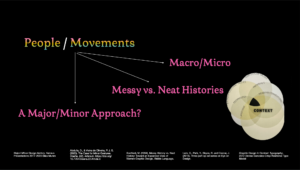
We created processes to ensure that we addressed students’ concerns and needs while also maintaining a cohesive vision for the project:
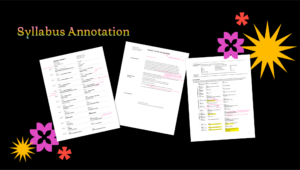
- Curriculum Assessment & Syllabus Annotation
Reviewing the existing framework to identify gaps, biases, and opportunities. - Defining New Learning Objectives
Establishing goals that center on equity, inclusion, and multiple perspectives. - Research & Content Expansion
Bringing in overlooked narratives, voices, and practices to enrich the curriculum. - Revised Structure & Pedagogical Methods
Reframing how material is taught through inclusive, critical, and participatory approaches. - Pilot Testing Assignments
Designing and testing coursework that challenges assumptions while remaining accessible and engaging. - Implementation & Reflection
Putting the revised curriculum into practice and assessing its impact for continued iteration.
Objectives:
- Identify and explain important designers and artists while being critical of a singular global context
- Understand and comprehend that design history is subjective and therefore varied
- Explore geographic, cultural, and historic context for design artifacts, objects, and systems
- Reconsider what is included in design practice by investigating craft, Indigenous, and other forms of making
- Question and understand the power systems that affect and influence the way design histories are taught
- Empower students and their peers to develop their own views and knowledge in design history
Student Testimonials
“As a student, I can tell that a lot of dedication, hard work, and sensitivity went into creating this curriculum,” she continues, “now, not only have we spoken more in-depth about designers of color, but we’ve also had many informative discussions about how long-standing issues such as racism and sexism have influenced design in the past and present.”
– Third-year student Ruby Sanchez
PROCESS & METHODOLOGY
- Discovery & Listening
- We began with conversations with faculty and reviewed existing syllabi and course materials to identify gaps and opportunities through annotations. We also facilitated discussions about what design history could look like when centered around multiplicity of voices rather than hierarchy. We had multiple discussions and conversations around language and terminology that have often been used to create a hierarchy within design history.
- Co-Designing the Curriculum
- Our approach to building the curriculum was collaborative. Together with DAAP faculty, we:
- Developed new course outlines and weekly modules
- Integrated readings from BIPOC scholars, designers, and cultural figures
- Embedded media, archives, and community-based examples
- Designed assignments that encourage critical engagement and reflection
- Designed custom weekly presentations that integrated BIPOC research and scholarship from both the BIPOC Design History classes and new research
- Our approach to building the curriculum was collaborative. Together with DAAP faculty, we:
- Implementation
- The new curricula were launched as Design History I and Design History II as part of the University of Cincinnati College of Design, Architecture, Art, and Planning (DAAP) program to reflect the diverse design histories that we are surrounded by.
- Feedback & Refinement
OUTCOMES & IMPACT
As the new curriculum took shape, students shared an array of unexpected discoveries when describing highlights from the Design History courses at DAAP. For instance, one student referenced The Harlem Renaissance, Lil Nas X, and Josef Muller Brockmann when sharing recent takeaways. Another student expected to hear a lot about white dudes in black turtlenecks but instead learned about global design, including works from the African continent and beyond. As another student put it, “the course showed [me] that there’s not just one right way to approach design.”
Beyond diverse approaches, student responses surfaced the importance of identity and inclusive representation of designers they learn about in the course. For example, one student shared that the designers who created the campaign to stop Asian hate resonated with him. Another student said, “Seeing the amazing things that they (women in design) are doing was special to me and empowering.” She added that the works of Black and Hispanic designers helped her see threads and connections in her design work. A third student mentioned that investigations into Indian design for an assignment prompted her to “reflect on the type of history I was consuming and also what I was learning about in school… So, personally, that became a goal of mine to focus on more Indian and Eastern-based history.”
A common outcome of unexpected discoveries and inclusive presentations is the students’ desire to learn more, delve deeper, and seek broader perspectives. For instance, seeing designers collaborate on the assignments inspired classmates to work together more in the studio, helping them think about their projects in new and unexpected ways. One student was motivated to explore studio projects in depth by spending time in the library discovering content that would shape her own work. A student also commented that the course helped her see that a designer can be an activist, a commercial designer, a fine artist, or a photographer. In other words, a designer “could be a bunch of different things, so it definitely broadens my horizons a lot,” she shared.
From these vignettes of student reactions, we get a picture of design history courses that are less about memorizing exact dates and major canonical names. They are, instead, courses full of activities that instigate unexpected discoveries, connections through identity and story, and an expansive outlook—major and minor—in design theory and practice. We are just beginning to explore these new approaches to teaching design history and sharing information, but student reactions show we are moving in a formative direction.
LOOKING AHEAD
As educators and designers who wear multiple hats, our work is never really done. Our work continues in new environments and contexts with collaborators, faculty, clients, and deadlines, which allows us to flex and introduce the varying facets of BIPOC Design History. Our hope is to create new collaborative models that shape the work we do together and expand innovation in ways that make design history more relevant to the next generation of students.
What we’ve learned together in this process becomes part of a larger continuum: sharing knowledge that is more accessible, can adapt to varying institutions, can expand beyond the history canon continuously, and reverberates for many generations to come. Design researcher, designer, and educator, Denise Gonzales Crisp, said, “Design is never done; it’s always due.” Our approach to teaching design history stems from that same sentiment. We see an evolution in each student, but we make space for collective consciousness and expression in each term of this unfolding curriculum that’s meant to adapt and change.
It is our hope that we continue to work with institutions of all sizes, from high school, undergrad programs, and master’s programs, to shape new curricula, create diverse and unique projects, and expand how design history is taught, understood, and practiced.