













course

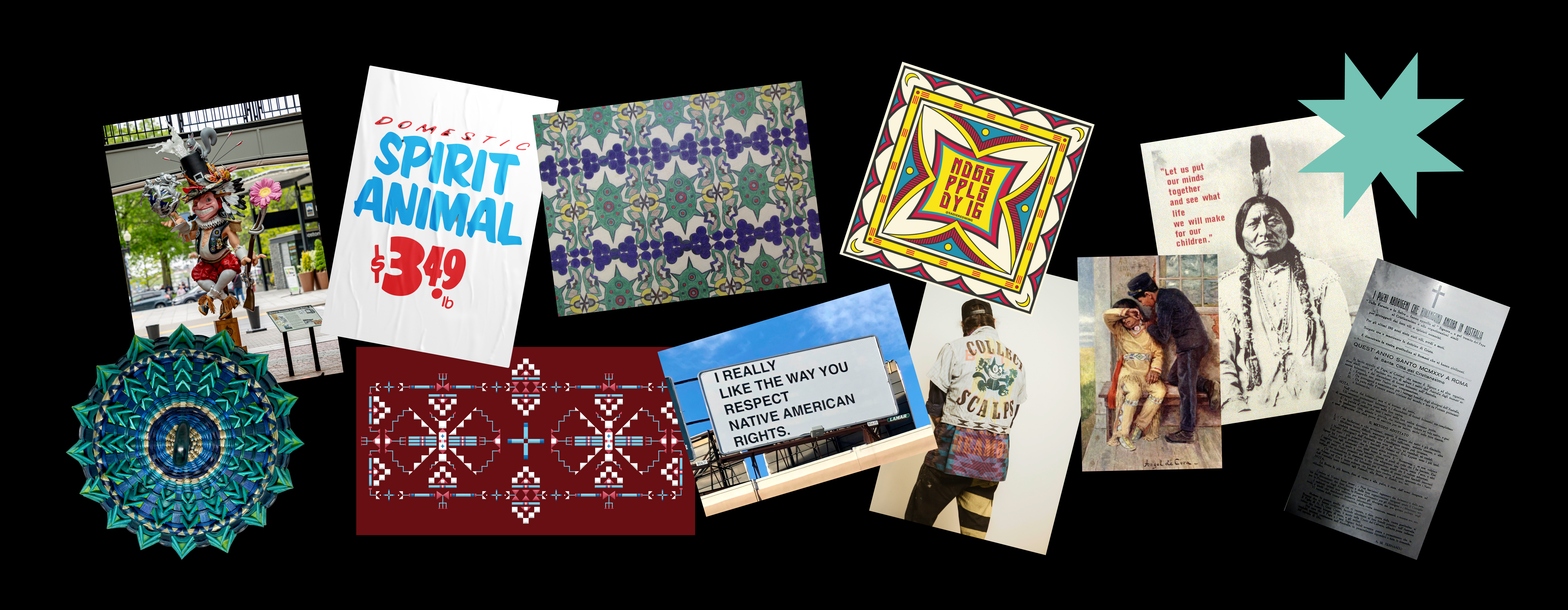
Course announcement for "Native American Design Through Remembered History" with woven patterns and geometric motifs. Facilitated by Brian Johnson, scheduled for July-August 2025.

(re)Creating Turtle Island: Native American Design Through Remembered History

Join us for our fourth course — (re)Creating Turtle Island: Native American Design Through Remembered History. The classes in this course will revisit and rewrite a story of design history that centers on previously marginalized voices of Native American designers...

Learn More

course

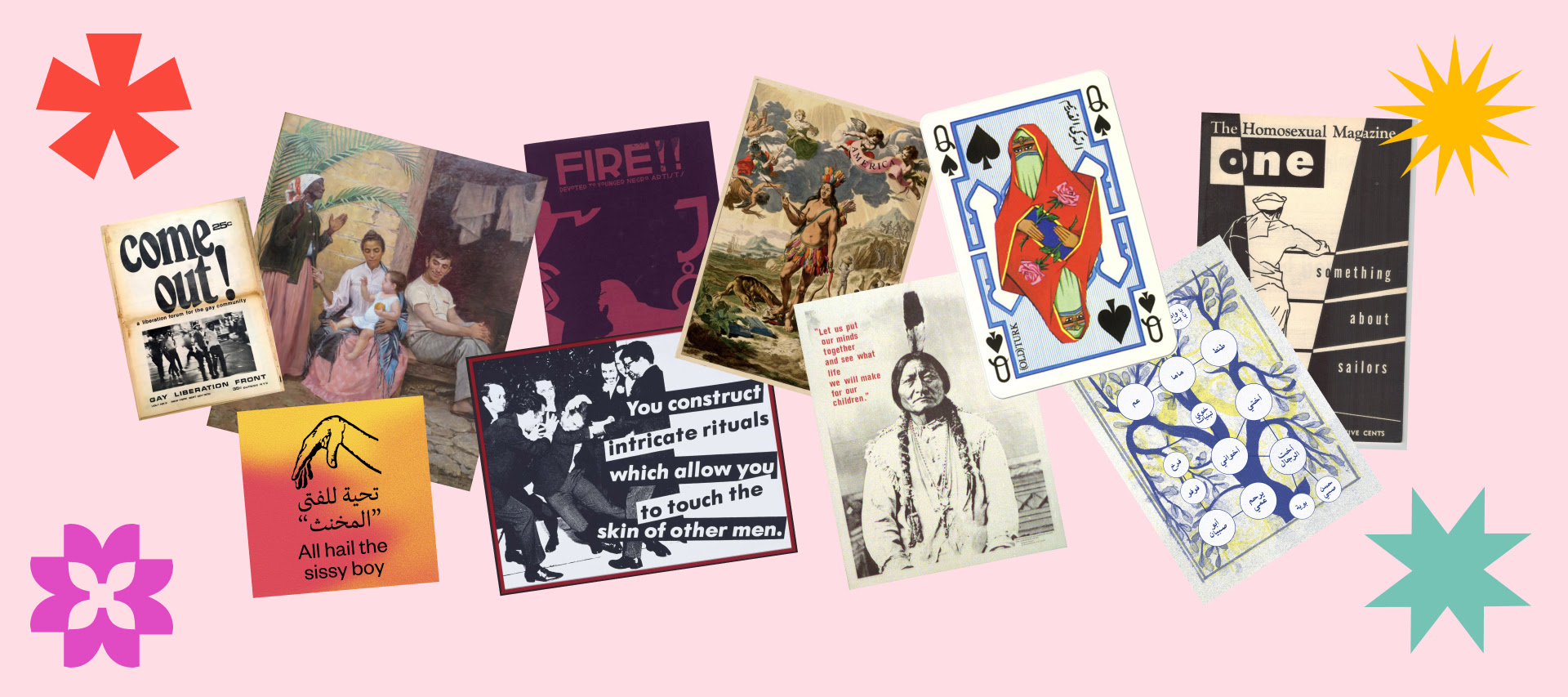
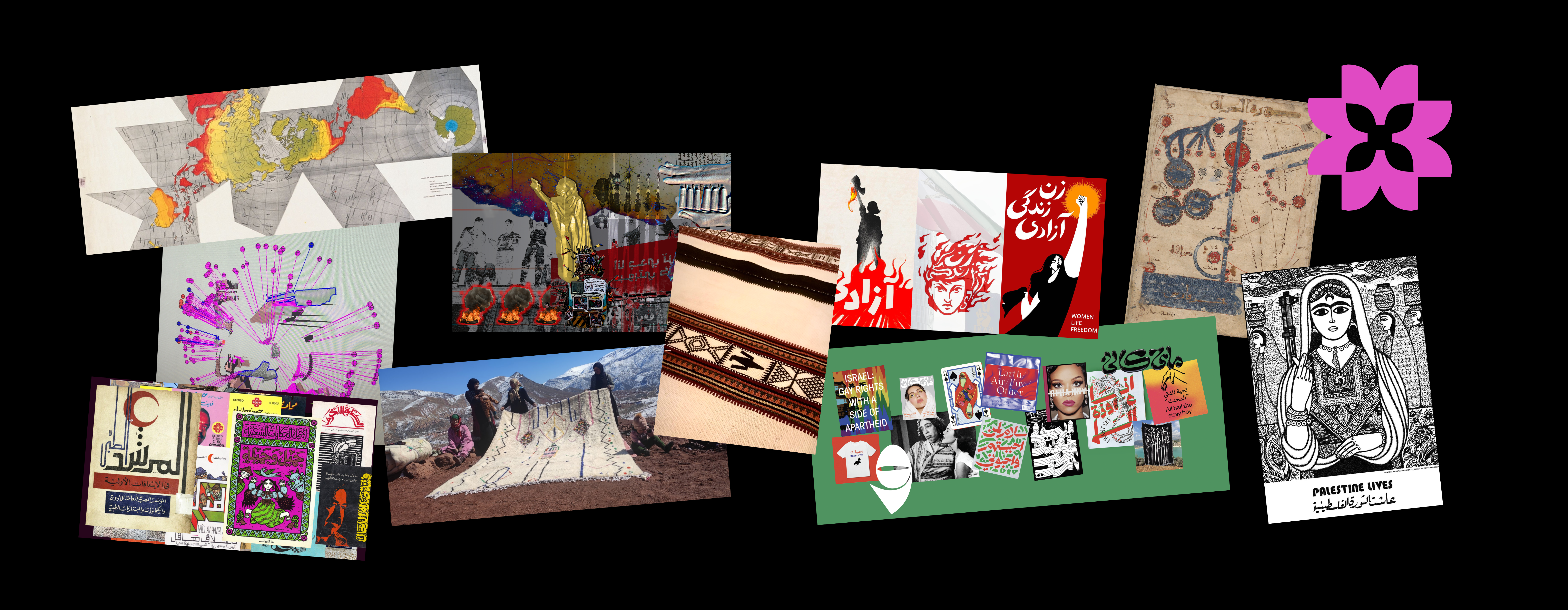
A vibrant collage featuring maps, book covers, weavings, and posters against a black background. Each image in the collage represents themes from the course Design Histories in Southwest Asia & North Africa: Voices from the SWANA Diaspora.

Design Histories in Southwest Asia & North Africa: Voices from the SWANA Diaspora

Design Histories in the Southwest Asia & North Africa: Voices from the SWANA Diaspora 12th – 21st Century is a course that highlights the diversity of our communities and puts forward the most vulnerable in our liberation. For the SWANA...

Learn More

course

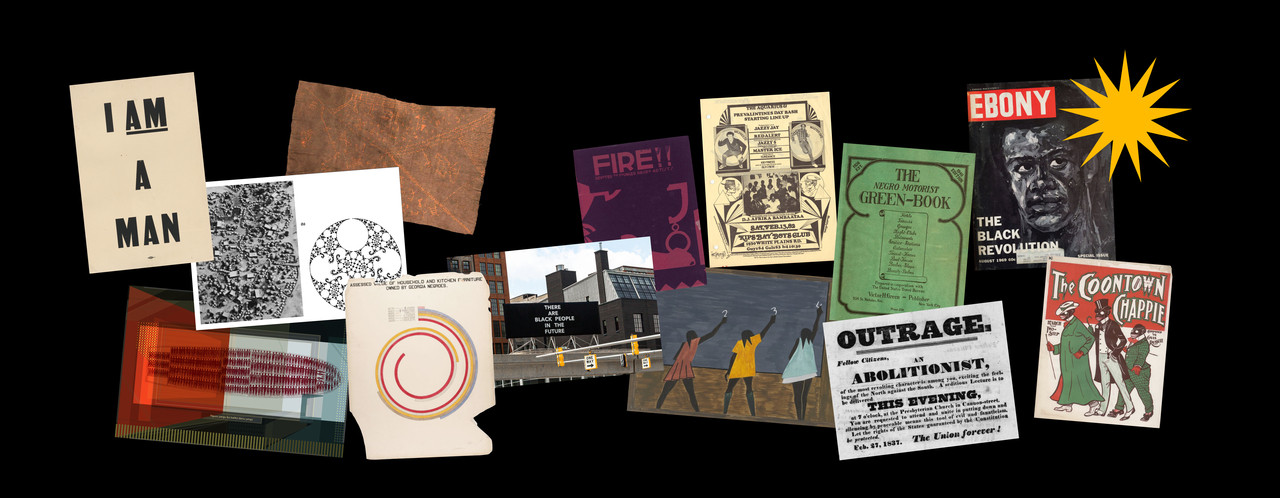
A vibrant collage of posters, books, and art that considers the contributions of people from the African diaspora to graphic design throughout history.

Black Design in America: African Americans and the African Diaspora in Graphic Design 19th Century – 21st Century

Black Design in America: African Americans and the African Diaspora in Graphic Design 19th – 21st Century is the first in a series of BIPOC Centered design history courses facilitated by Polymode. Through recorded lectures, readings, and discussions, the class...

Learn More

class

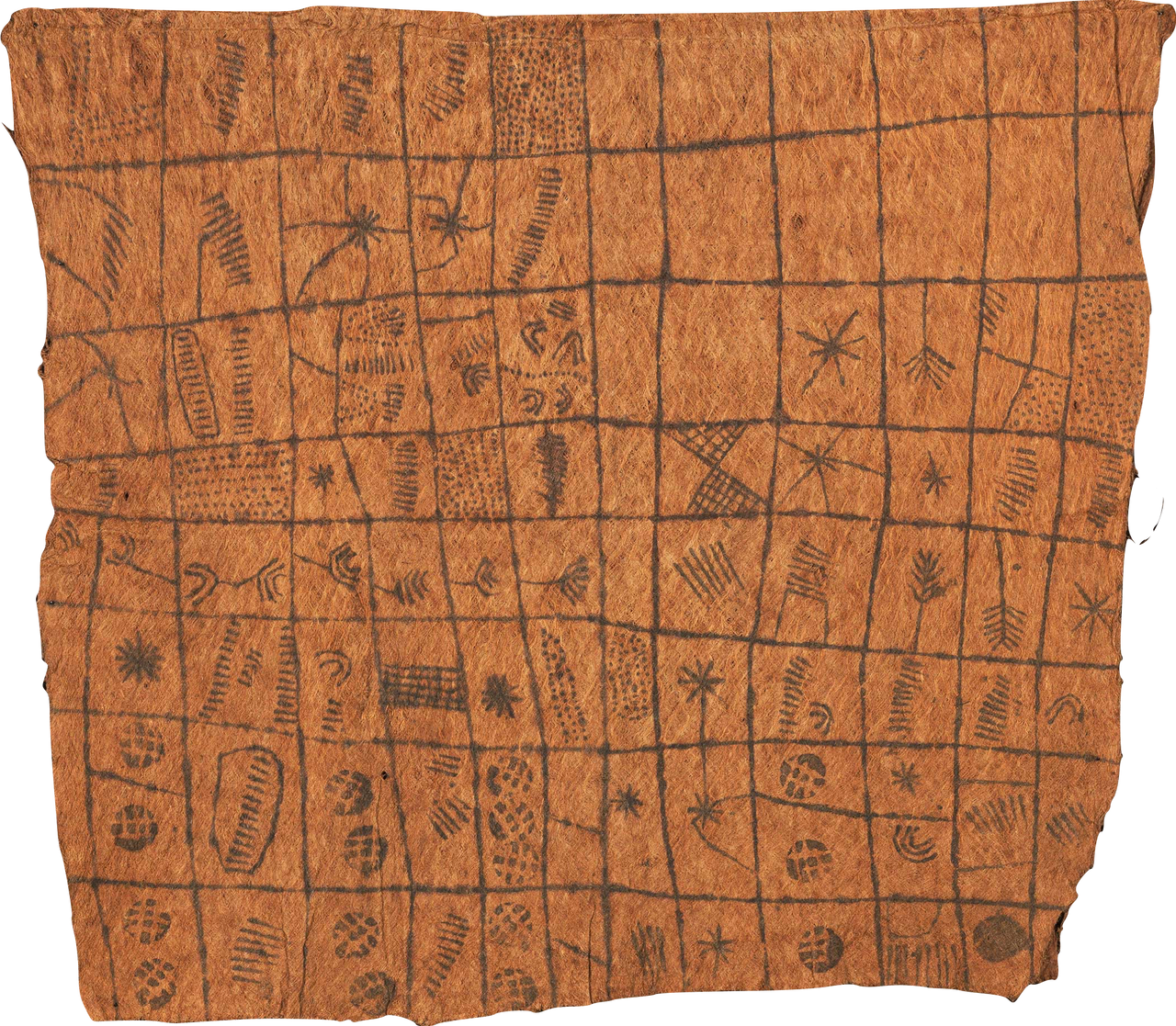
A tan leather colored bark-cloth with dark brown lines dividing the cloth into square sections, with various motifs composed of lines inside of them.

Afrikan Alphabets & African Diasporic Design Lineage

Counter to colonial notions of the savage or primitive African, there is a complex, rich and multi-cultural history of African design. From the research of graphic designer Saki Mafundikwa on Afrikan alphabets and graphic languages, this opening video will set...

Learn More

class

New

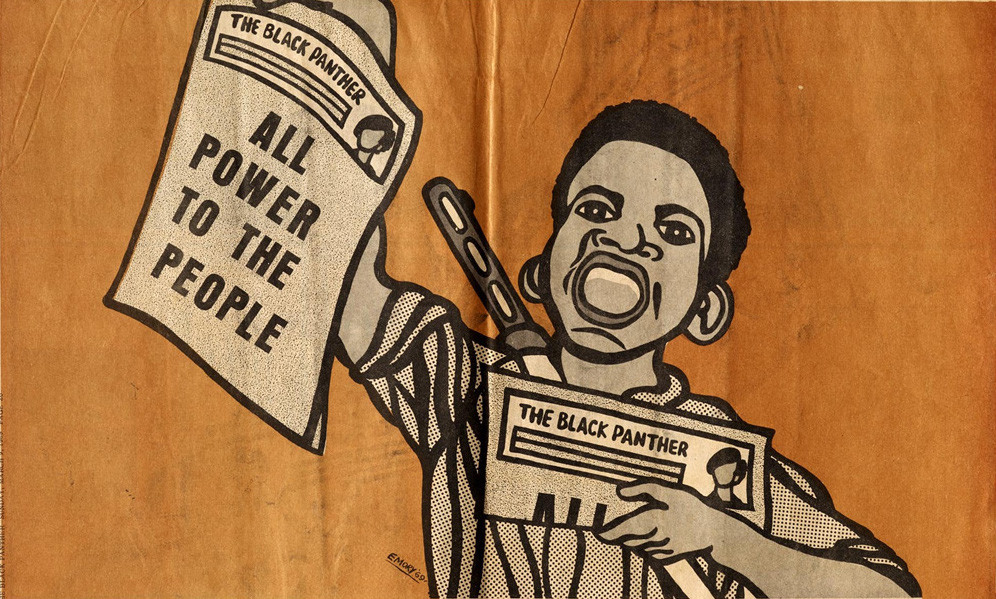
All Power to the People: Black Panther Party artist Emory Douglas’s posters as activism and tools for change

All Power to the People: Black Panther Party artist Emory Douglas’s posters as activism and tools for change

This class is led by the brilliant Colette Gaiter, continuing her impactful lecture from our first BIPOC Design History course, Black Design in America. This special session will spotlight the revolutionary work of Emory Douglas, Minister of Culture for the...

Learn More

class

Billboard featuring the phrase "There Are Black People in the Future" the letters are all capitalized in a white color, on an all black background. It highlights Black representation, empowerment and hope.

Behind and Ahead of the Times: Histories and Futures of Black Futurity

The Black experience(s) in the United States cannot easily be extracted from how we are collectively situated in time: it is shaped simultaneously by the weight of past and present oppressions and the precarity of our futures. White supremacy would...

Learn More

class

A spiral illustration featuring red, yellow, and blue lines. It Reads “Assessed Value of Household and Kitchen Furniture Owned By Georgia Negroes.” All the lines represent real data from a study. Each line represents a year, staring at 1875, and increasing by 5 until 1900. The digram shows that from 1875 - 1900 the amount of Black people who owned furniture grew exponentially, one can assume probably the quality of furniture owned also increased as time went on.

Black Data: W.E.B. Du Bois and Data Visualization

Known for being a prolific author, renowned sociologist, fierce civil rights advocate for people of color, founder of the NAACP, and historian, WEB Du Bois was also a pioneer of data visualization. The American Negro was one initiative of the...

Learn More

class

A book cover with a deep violet background, featuring red decorative elements. It reads “FIRE!! Devoted To Younger Negro Artists” The bottom of the cover has triangles as a decorative framing device. Between the text and triangles is a silhouette of a sphinx. It is framed by two abstract shapes on each side of it.

Black Queer Stories in Print: 19th Century to the Harlem Renaissance

In the 1830’s The Sun Newspaper ran a story never shared before in print: a man by day and woman by night who was on trial in New York for theft. Mary Jones/Peter Sewally was one of the earliest known...

Learn More

class

The cover of Ebony magazine from August 1969. The Ebony logo is featured top left, white letters all capitalized encased in a red rectangle. Huey Newton is the subject of the cover. His likeness is painted with black and various shades of grey. The brushstrokes are large, the colors are painted purposefully splotchy. The title of this issue reads “The Black Revolution’.

Black Revolutions: Organizing the Production of Black Design

The cover of the August 1969 issue of Ebony declared the age of The Black Revolution. As a commodity, however, the issue of Ebony embodied the ethos of Black capitalism. The flagship publication of the Johnson Publishing Company, was the largest Black-owned...

Learn More

class

A Music sheet cover with 3 black human figures wearing suits illustrated as minstrels. They are smiling, 2 carrying canes. Their poses look as if they are in a smooth walking stride. On the top third in a red block with white text outlined by a green stroke it reads, “The coontown chappie”. Below the block on the left side in the same black color as the figures skin, it reads “march and two step” and the right side reads “ composed by Chas Russell”

Blackface and Minstrelsy Tradition

This lecture will explore a brief history of Black representation as it appears in music publishing during the late 19th to the early 20th centuries. Following Emancipation, White entertainers and musicians adopted Black stereotypes into minstrel show performances. Minstrel shows...

Learn More

class

Historical handbill advertisement for an abolitionist lecture. It reads “OUTRAGE. Fellow citizens. An ABOLITIONIST of the most revolting character is among you, exciting the feelings of the north against the south. A seditious lecture is to be delivered THIS EVENING. At seven o’clock, at the Presbyterian Church in Cannon-street. You are requested to attend and unite in putting down and silencing by peaceable means this tool of evil and fanaticism. Let the rights of the states guaranteed by the constitution be protected. Feb 27,1837. The Union Forever!

Designing Emancipation

From the early 1830s to the signing of the Emancipation Proclamation outlawing slavery in 1863, Boston was the center of the American anti-slavery movement. Organizations such as the Massachusetts Anti-Slavery Society posted broadsides throughout the city to publicize the day’s...

Learn More

class

Poster for the Kips Bay Boys Club in 1982 by Buddy Esquire. The poster is on yellowed paper, its design is ornate featuring graphic elements as frames for text and photo. The style is reminiscent of the art deco style. At least 3 different fonts are used on the poster, a sans serif for smaller information, cooper black for known performer names, and another display font that has swashes on some of the letterforms. The poster is visually loud, and organized.

Funk, Blaxploitation, & Hip Hop Aesthetics

From the bass heavy riffs of Curtis Mayfield’s SuperFly 1973 soundtrack to the scratch and synthesized Brox rhythms of 1970s and 1980s DJ’s like Afrika Bambaataa and Grandmaster Flash—the histories of Black music and Black design have been intermixed. Many scholars have foregrounded Phase...

Learn More

class

A green book cover with black text and a decorative frame. In the top left and right corners of the frame it reads “EST 1936”, and “1940 edition. Centered starting from the top of the frame is the title of the book, “The Negro Motorist Green Book”. Under the title is an illustrated scroll with the words “hotels, taverns, garages, night clubs, restaurants, service stations, automotive, tourist homes, road houses, barber ships, beauty parlors”, and ”prepared in cooperation with the United States travel bureau” under the scroll. Victor H. Green is the publisher of the book, it was twenty-five cents at the time of its release.

Iterative Identity: Art Deco, World’s Fair, and American Limits on Humanity

One of the key promises of the American Dream made by the automobile industry in the 1930s–1950s was the individual freedom of a car owner on an open road. This was marketed with innovations in advertising, exhibition design, and product...

Learn More
Nicole Mourad

Living as a Lebanese American woman in today’s America has been a unique experience filled with so much community, culture, and a twinge of loneliness. While jumping into the world of design exposed me to so many rich diversities, it was still difficult at times to see myself and my people represented in the education I was receiving. Getting the opportunity to take the BIPOC SWANA course truly allowed me to indulge in not only the rich history of my culture, but the depth and visual beauty behind it. This course inspired me in a way that I had not been before, so much to the point that I booked a flight not much longer than a month after to Lebanon - to see where myself and much of the design I’d recently learned about had originated from. It was a blessing to participate in an experience that brings together minorities in such a rich and meaningful way.

Licenses for institutional use are available and customizable to fit your needs. Contact us at [email protected] to provide your students, employees, and designers with access to our BIPOC Design History Course.

Learn More About Licensing